
Lihat juga


 23.09.2026 08:10 AM
Bitcoin and Ether made another leg up and are edging closer to a full-blown bullish trend. We still can't point to definitive reasons for the new sharp rise in digital assets. Of course, it comes down to supply and demand — demand surged, so prices rose. But why demand jumped is hard to say even in hindsight. Recall that the last two major events that should have been negative for crypto were in play: central banks, notably the Fed, began to tighten policy, which increases demand for safe-haven assets like bank deposits and government bonds, and the Clarity Act, legislation meant to regulate crypto investing in the US, again failed to pass through Congress. By the logic of things, the crypto market should have fallen, not exploded upward. However, as we warned earlier, pumps don't need reasons, and they follow no logic.
Meanwhile, former BitMEX CEO Arthur Hayes said the AI sector would support Bitcoin. If AI continues developing at the current pace, the digital segment will grow alongside it, since AI agents will gain traction in crypto operations. Hayes also points out that the AI sector has already accumulated around $1 trillion of investment-grade obligations and several hundred billion in lower-quality debt. All these debts ultimately fall on insurers' balance sheets, and a significant portion of the US insurance industry could face insolvency if AI-related credit is revalued at market levels. If the AI sector collapses, those debts will effectively land on the US government, which would be forced to buy them out or turn on the printing presses to support insurers. Either outcome implies additional issuance and money supply growth, which would stoke inflation and channel extra liquidity into the crypto space.
Historically, Bitcoin rises when Fed policy is loose, during stimulus programs and when money supply increases. Thus, almost any financial crisis tends to benefit the first cryptocurrency. Note that the Fed is currently on a tightening path, so we view the current move less as a logical market development and more as a pump. Thanks to the pump, Bitcoin could theoretically rise to $200,000, but there is no sensible fundamental explanation for such a move.
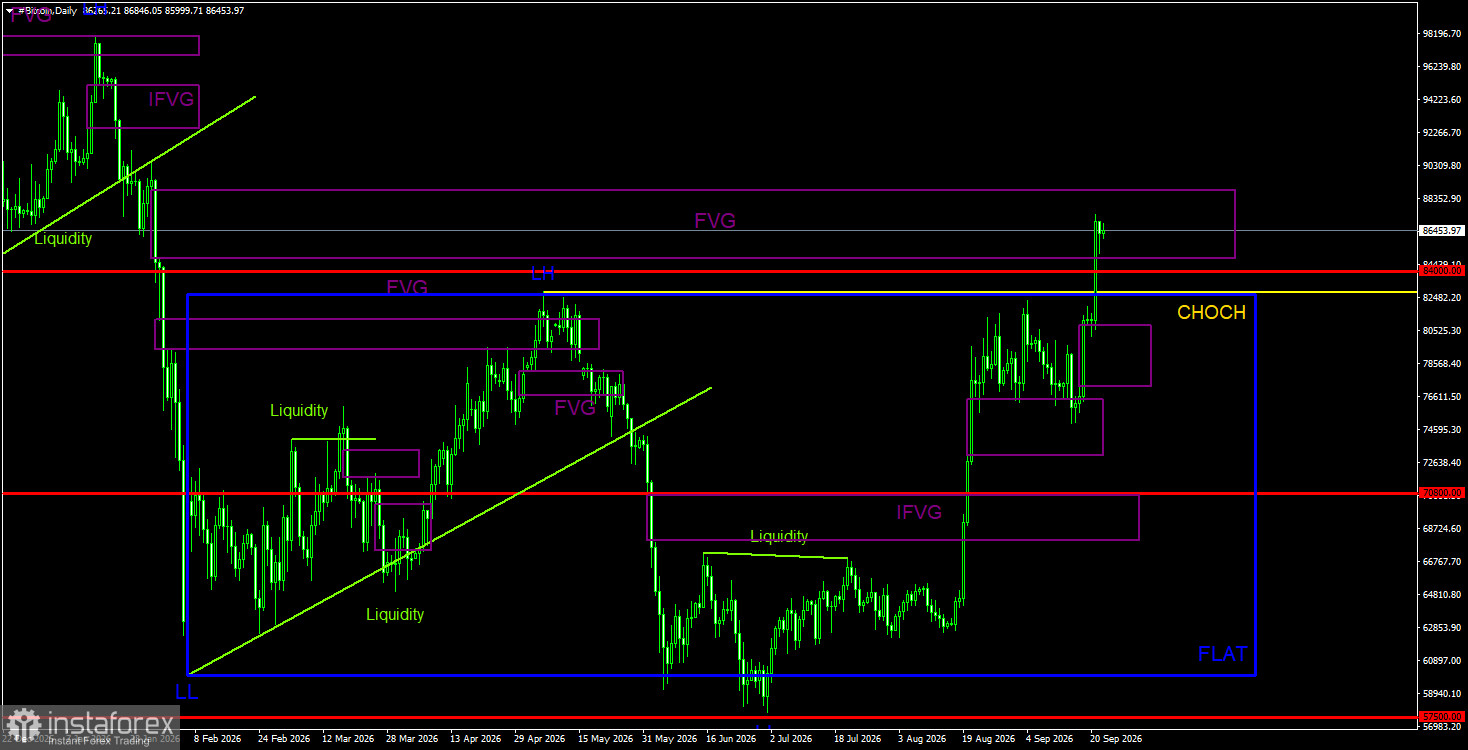
Bitcoin shows all the signs of a new bullish trend beginning. This trend starts, as expected, with a pump that has no concrete, clear causes. The Fed has not begun easing rates, and the Clarity Act was not passed. On the daily chart, Bitcoin may get a reaction to a bearish FVG that could trigger a downward correction. Traders should also note the current breakout from the daily sideways channel may be a deviation — yes, a deep deviation, but a deviation nonetheless. On the 4-hour chart, it is possible to consider long positions from the most recent bullish FVG. However, we currently favor a corrective scenario.
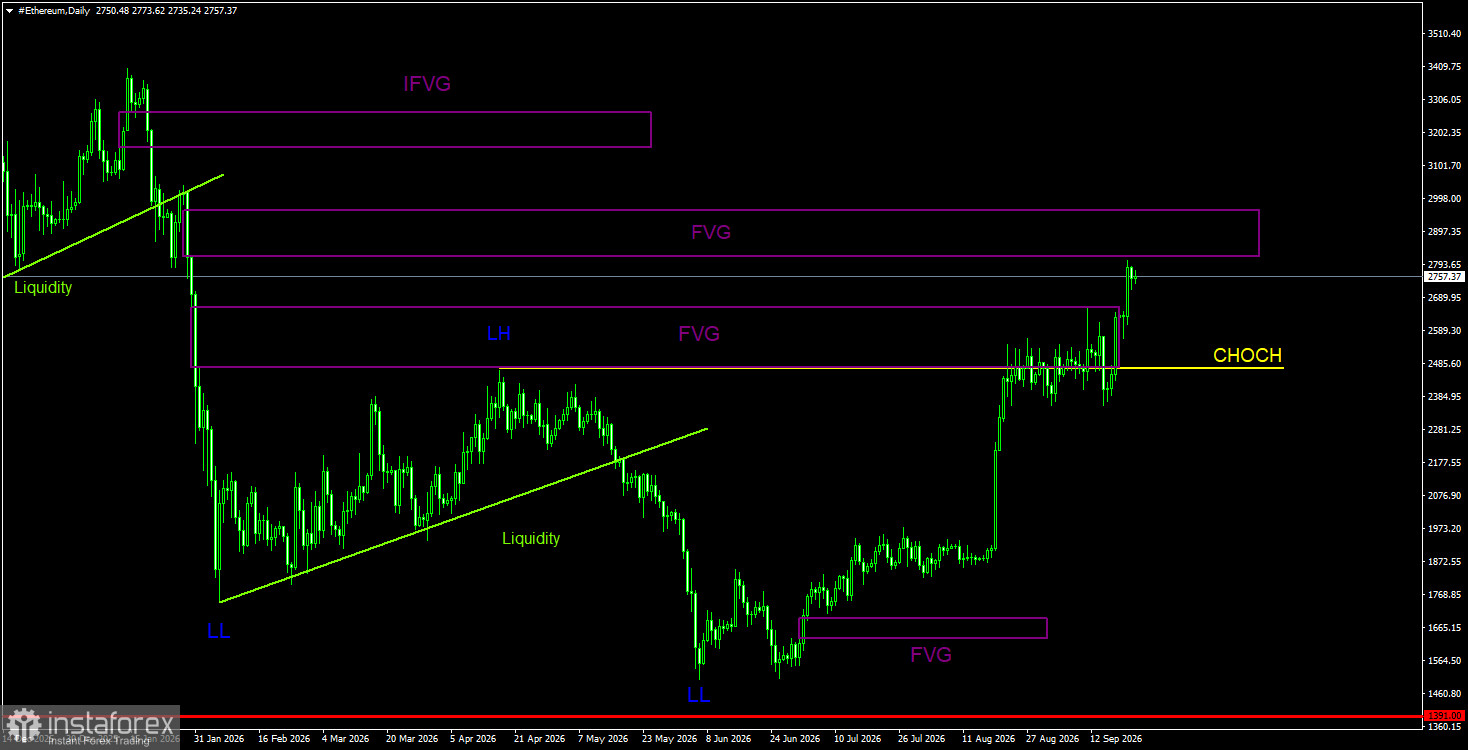
On the daily chart, the technical picture for Ether has transformed in just a few days. Ether now faces the direction of a new uptrend. Traders should, however, anchor analysis to the weekly chart, where Ether is heading toward $4,800, the upper boundary of a five-year sideways channel. On the daily chart, the first bearish FVG did not elicit a meaningful price reaction; the next FVG might. Bitcoin also tested its nearest bearish FVG, so both cryptocurrencies may begin a correction shortly. The recent rise in digital assets has been driven solely by a pump. Right now, there are more fundamental reasons to worry about both cryptos than there are reasons to be bullish.


