
Vea también


 05.11.2026 11:50 AM
On Wednesday, EUR/USD rebounded from the 127.2% retracement level at 1.1220 and posted some gains toward the 100.0% Fibonacci level at 1.1325. However, as traders often put it, price movements remain choppy. The pair continues to change direction in both the short and medium term. On the intraday timeframe, corrective pullbacks occur throughout each trading session, while on the medium-term timeframe, the pair has been trading within a horizontal range for approximately a month. The number of false signals around the 1.1220 level has been several times higher than the number of reliable ones.
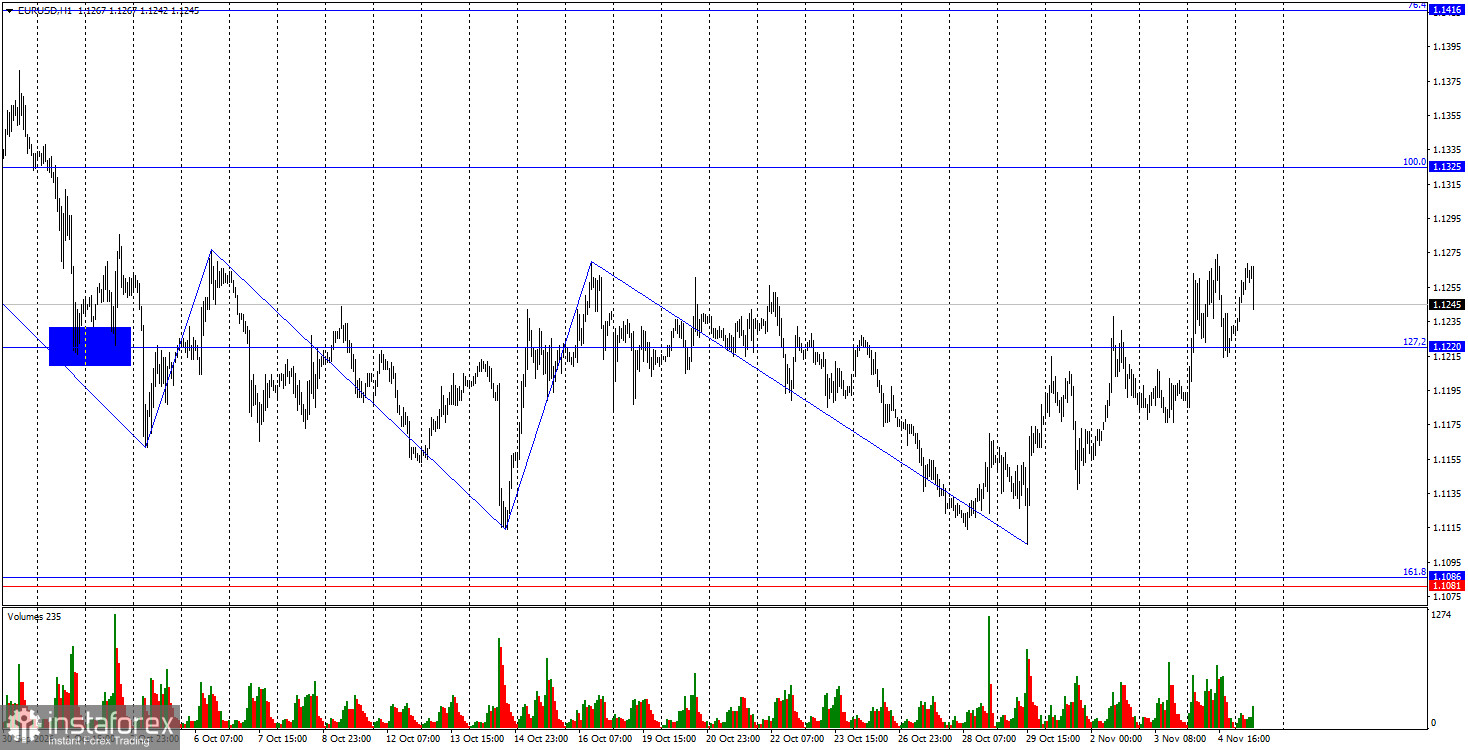
The wave structure on the hourly chart remains bearish. The latest completed downward wave broke below the previous low, while the new upward wave has not yet broken above the previous peak. Following the September FOMC meeting, traders expect at least one more monetary policy tightening before the end of the year and another one next year. This factor continues to provide substantial support for the US dollar, while traders consider other factors secondary.
At first glance, Wednesday's news background appeared favorable for further gains in the European currency, but traders once again took a different view. The dollar began to decline immediately after information about the progress of the US elections was released, but the decline was short-lived. Neither high inflation in the European Union nor the weak US Services Business Activity Index managed to sustain bullish momentum. Thus, it can be said that bulls once again failed to capitalize on the opportunities available to them. Under these circumstances, it is difficult for the European currency to count on further gains, regardless of the incoming news flow. Today has barely begun, yet the euro has already declined sharply. A significant decline is unlikely today; however, the Bank of England meeting could influence the euro's direction, either positively or negatively. Tomorrow, the US Nonfarm Payrolls report and unemployment rate will be released, and traders may once again interpret the figures in an extremely one-sided manner. In other words, the dollar could resume its upward movement after rebounding from the boundary of the horizontal trading range, even if US economic data turns out to be weak.
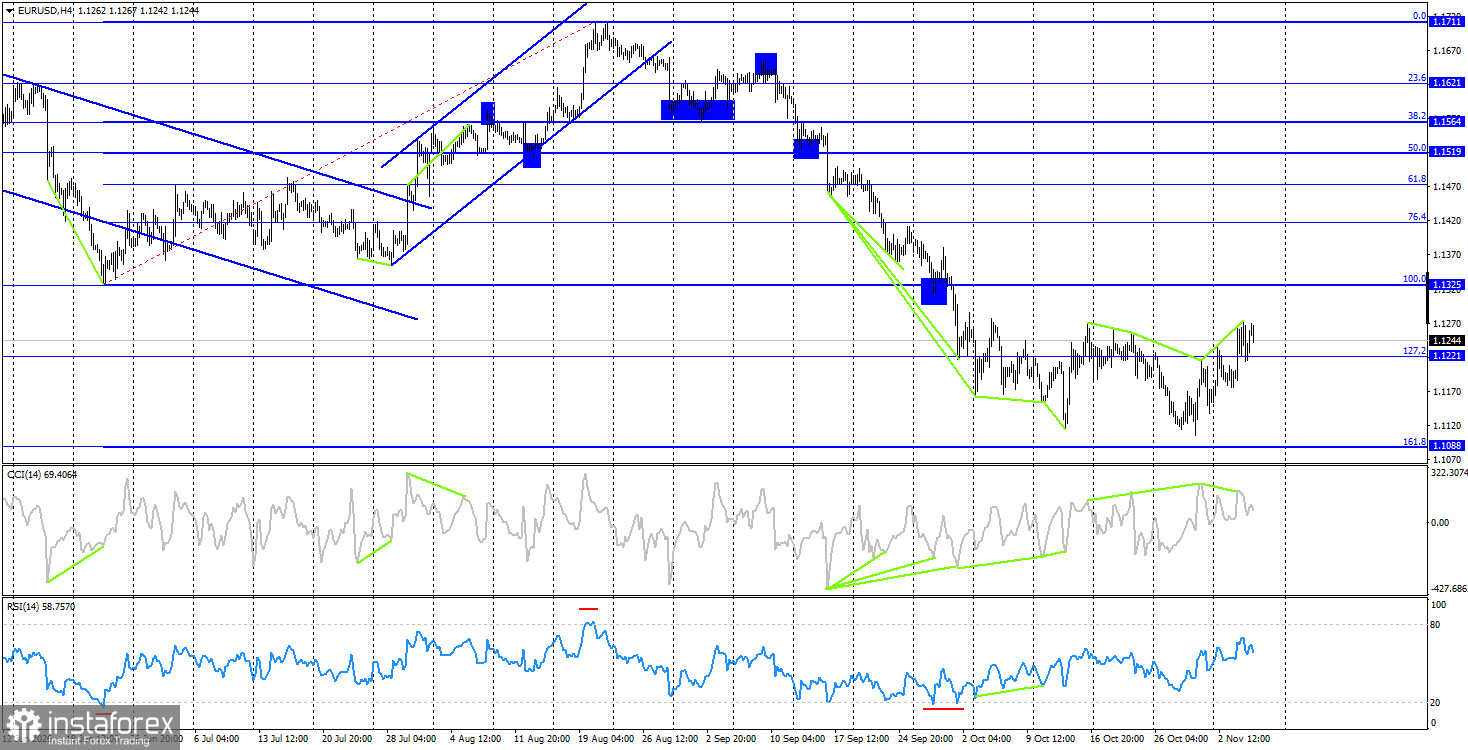
On the 4-hour chart, the pair reversed in favor of the euro and consolidated above the 127.2% retracement level at 1.1221. Therefore, the upward movement could continue toward the next Fibonacci level of 100.0% at 1.1325. Consolidation below 1.1221 would once again favor the US dollar and could lead to a resumption of the decline toward the 161.8% retracement level at 1.1088. The CCI indicator has already formed a second bearish divergence.
Commitments of Traders (COT) Report:
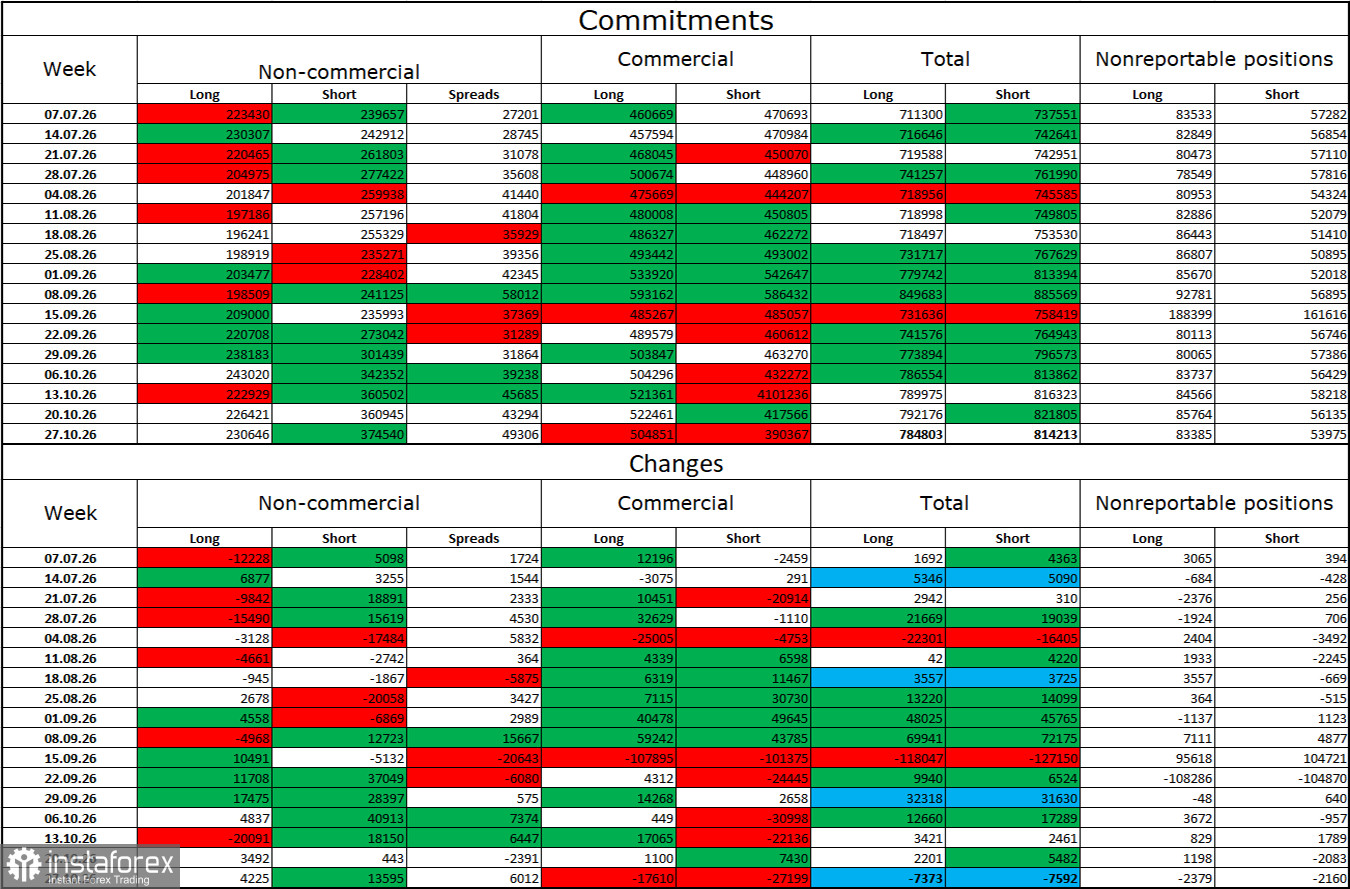
During the latest reporting week, professional traders opened 4,225 Long positions and 13,595 Short positions. The total number of Long positions held by speculators currently stands at 231,000, while the number of Short positions amounts to 374,000. Bears continue to dominate, and the European currency is still being sold more frequently than it is being bought. This can be attributed to the challenging geopolitical situation in the Middle East and Kevin Warsh's intention to bring inflation down further. The market believes that the Federal Reserve will continue raising interest rates for as long as necessary.
Overall, major market participants continue to show considerable interest in the euro over the long term. Certainly, various global events, which have been particularly numerous in recent years, influence investor sentiment and put pressure on risk-sensitive currencies. Moreover, 2026 could set a record for the number of unforeseen events. Therefore, the European currency is awaiting a more favorable opportunity.
Economic Calendar for the US and the European Union:
On November 5, the economic calendar contains two events, neither of which can be considered particularly important. The impact of economic data on market sentiment on Thursday could be limited.
EUR/USD Forecast and Trading Recommendations:
Buying the pair was possible following an hourly close above 1.1220, with a target of 1.1325. These positions can remain open. Selling opportunities may arise following an hourly close below 1.1220, with the 1.1081–1.1086 support level as the target.
The Fibonacci levels are drawn from 1.1325 to 1.1712 on both the hourly and 4-hour charts.


