
Vea también


 12.11.2026 05:33 AM
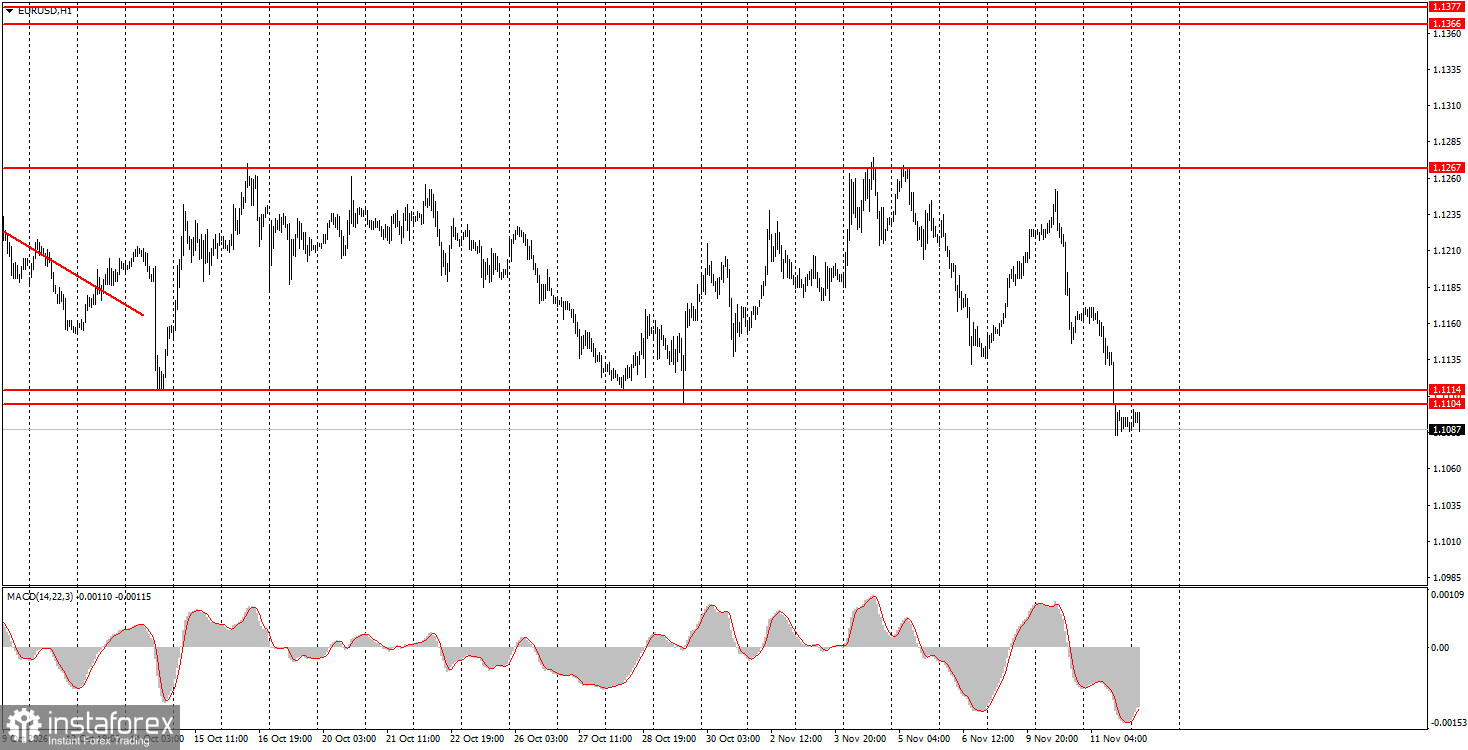
The EUR/USD pair continued to fall on Wednesday following Tuesday's events. As we saw in November 2026, a single US inflation report can send the dollar up 100 or even 150 pips, and the market now processes such reports over several days. Why does this happen? In our view, the market still consciously refuses to buy the euro. Only a week ago euro-area inflation data showed a rise to 4%. That means inflation in the EU is currently even higher than in the US, and the European Central Bank has raised rates more times than the Federal Reserve. Nevertheless, only the dollar has been rising over the past three months, and the euro cannot even correct. Analysts keep inventing new explanations for the dollar's strength and are already on their second or third cycle. The Fed has raised rates once, and the market has been working through that factor since the summer. Yesterday, the price closed below the 1.1104–1.1114 area, which means an exit from the sideways channel. There are no signs that the downtrend has ended.
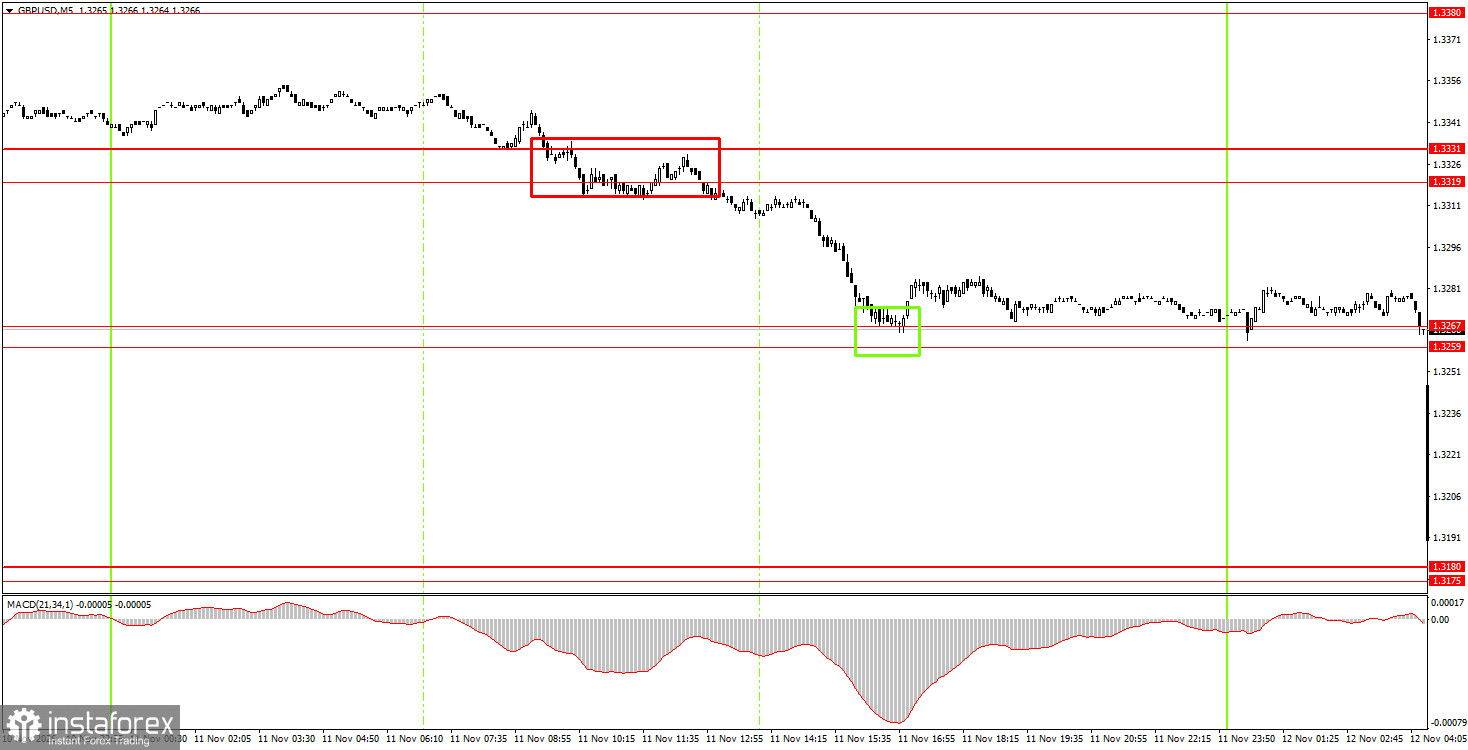
On the 5-minute timeframe, one sell signal formed on Wednesday. During the US session, the price broke below the 1.1104–1.1114 area, allowing traders to open new short positions. The prior signal formed on Tuesday in the 1.1198–1.1218 zone and could easily have been carried into Wednesday. The Wednesday signal could be carried into Thursday. What difference does it make if the price moves only in one direction?
On the hourly timeframe, EUR/USD has resumed forming a downtrend, and the flat appears to be over. The euro has still not corrected properly in recent weeks. Considering all the events of recent months, we do not believe the euro had to fall like a stone. At the moment, the dollar is heavily overbought, and many euro-positive factors are simply being ignored.
On Thursday, novice traders can stay in short positions or open new shorts on a bounce from the 1.1104–1.1114 area, targeting 1.1011. Open long positions after a close above the 1.1104–1.1114 area, targeting 1.1198–1.1218.
On the 5-minute timeframe consider the levels 1.0940–1.0952, 1.1011, 1.1104–1.1114, 1.1198–1.1218, 1.1267–1.1275, 1.1366–1.1377, 1.1461–1.1474, 1.1527–1.1531, 1.1584–1.1594. The only notable event on Thursday is a speech by ECB President Christine Lagarde, who is unlikely to say anything new to the market and is even less likely to support the euro. In the US today, only secondary reports are expected, with no impact on market sentiment.
Price levels (areas) of support and resistance — levels that serve as targets when opening longs or shorts or as sources of signals.
Red lines — channels or trendlines that display the current trend and indicate the preferred trading direction.
MACD indicator (14,22,3) — histogram and signal line — an auxiliary indicator that can also be used as a source of signals.
Important speeches and reports (listed in the news calendar) can strongly affect a currency pair's movement. Therefore, when they are released, one should trade as cautiously as possible or step aside to avoid a sudden price reversal against the prior direction.
Beginner forex traders should remember that not every trade can be profitable. Developing a clear strategy and money-management rules is the key to long-term success in trading.


